Inheritance and civic life · Topology of Devotion
Hayekari culture
A frontier inheritance of liberty and voluntary association lives on through family names, public argument, and the obligations of a coalition.
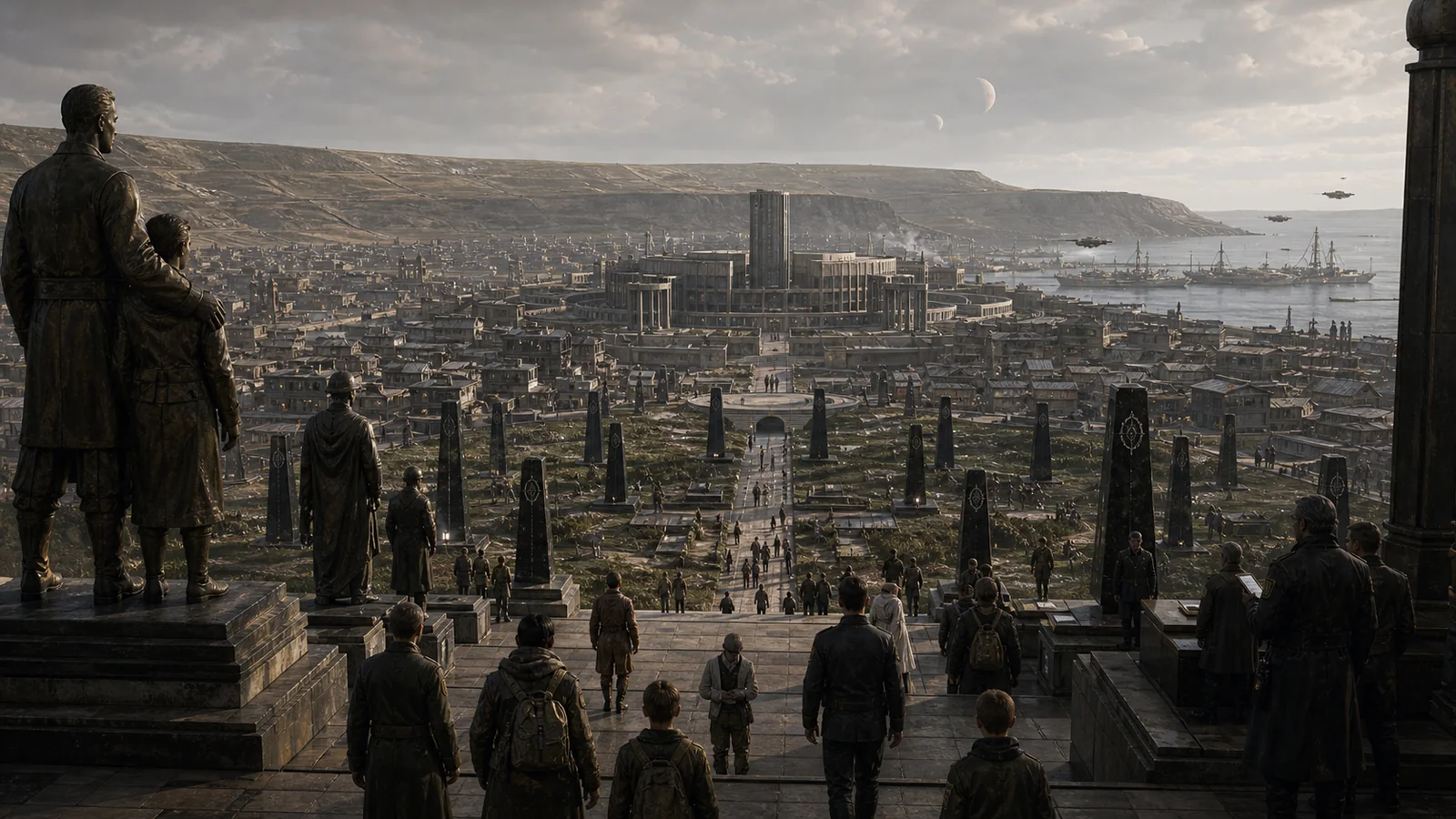
Hayekar was settled substantially by North American libertarian and classical-liberal communities. Its founders named the world after Friedrich Hayek. Their intellectual and political inheritance survives through family memory, naming, public argument, and ideas about responsibility and the limits of distant authority.
Names and inheritance
Some Hayekari families use the surnames of philosophers, economists, founders, and admired political figures as children’s first names. A name can express aspiration, affection, family history, or an argument with the past. It does not establish the named person’s beliefs.
The population has also changed through generations of immigration, diaspora, religious life, and regional development. The founding communities are an important inheritance, not a complete description of everyone who lives on the world.
Argument in public
Adamant is known for vigorous public political discussion. Liberty, property, personal responsibility, voluntary obligation, and the proper reach of authority are subjects of everyday argument as well as congressional debate.
The city’s institutional role gives that discussion concrete stakes. A culture with a strong suspicion of remote control hosts the machinery through which many independent worlds negotiate shared commitments.
Remembering together
Adamant’s memorial fields accommodate different religious and personal forms of mourning. Candles, prayer objects, mourning cords, and shared singing appear among the black stones. No single tradition holds the whole field.
The presence of civilians, workers, children, and military visitors makes remembrance part of public life. The people gathered there bring different practices to a place held in common.
FOLLOW THE CONNECTIONS
Related articles
Reading references
- Topology of Devotion — Chapters 3–5
- Author’s world notes — Hayekar and Adamant
Introduction view omits plot outcomes. Interpretive articles are readings of the fiction.